Wednesday, July 31, 2013

In search of Perthection

It’s very strange to stand still for a while. To stop, to dawdle, to twiddle thumbs unsure of what to do. To not have to fill up the car with petrol every single day, discount vouchers accumulating like faded biblical scriptures in the glove box. I think this is the void that work fills. I tried to fill the void with work and it was a partial success; my mind begins to turn to longer term commitments and the silly idea of getting a proper job. So when that started to happen, I booked a trip on hard work-earned frequent flyer points to escape to Europe!


Perth is not a bad place to stand still, not a bad place at all. I’ve been standing still enough to establish regular haunts and favourite spots. Of course, most of these involve food or drink of some kind. So, apart from doing some reasonably leisurely work I have been taking breaks to go for coffee by the beach. The very laid-back walk between City Beach and Floreat Beach ideally bookended by two rather fine waterfront cafes. The steps at Scarborough ideal for a takeaway flat white and scrumptious home-made salted caramel and chocolate slice, softening the endeavour of reading a few chapters of the never-ending tome that is the Game of Thrones library.

And of course, being beside the sea, a westerly stretching sea has offered the odd sunset. Although I think Canberra still has more colourful sunsets.


Other activities include shopping for food and cooking it. One thing that is to be said for standing still is a proper kitchen and an oven and fridge and freezer, so hello lasagne and pork belly and comforting chicken and chorizo bakes and pizza and home-made scones with jam and adequate cream. Only adequate though...I must need to get ‘home’. 

All this cake and laborious reading beside the beach and lardy home baking started to make me feel a little guilty. This, coupled with a little restlessness made me transform a nice walk around Lake Monger into a little bit of running. Then I did it again, at Lake Herdsman, then again back at Monger and even further this time without stopping. Still, such escapades have allowed me to discover some of the parks and open spaces of Perth and its surrounds. Like Bold Park, which is a fine, wild space sprawling between the inner suburbs and the sea, its rolling heath and bushland undoubtedly waiting to burst into flower at any moment.

While finding the new has been good, the old, revisited has been better. A calm but overcast Sunday afternoon meandering through Kings Park a delight. Meandering you note, not running. Running would do its beauty an injustice. Signs of things to come emerging from the undergrowth, hopefully ready for my return.


For now I am having a ridiculously expensive beer at Perth International Airport. I’ll be in Munich tomorrow, probably supping on a better and less expensive beer, hopefully with some of those touristy clichéd serving wenches providing the refill.  I better go....plane to catch...can’t stand still. 

Saturday, July 06, 2013

Mine, not quite all mine

It only took about 24 hours for the idyllic paradise of Turquoise Bay to take on the appearance of a wet weekend in Grimsby. In an area of extremes in a land of extremes, heavy, sustained unseasonable rain pounded the Pilbara for nigh on two days, keeping us contained in an Exmouth that more closely resembled its English namesake, with the obvious exception of the still surprisingly good coffee. A set of circumstances that presented a chance to clock up work hours and take coffee breaks to interrupt the endeavour.

Mercifully the rain subsided for the long drive inland towards Tom Price, albeit with residual floodwaters for careful and cautious navigation. Tom Price is a mining town, named after a mining company executive who decided the hills were ripe for pillaging. Iron ore is the name of the game here, and Tom Price sprung up like a scruffier Canberra suburb to house workers and families and enable them to shop for fried food, drink at the local pub, and go to the local hospital after too much fried food and beer.

When in Rome do as the Romans do, which here means don a hard hat and protective goggles and drive past gigantic yellow machines gradually carving infinite levels out of a hillside in the pursuit of riches to sell to China. Unfortunately it does not mean getting paid like the locals, rather parting with $30 of hard earned cash to view operations at the Rio Tinto Iron Ore mine. Which is all rather fascinating actually, and gives a more informed perspective on the scale and process involved in digging up a hill and shipping it to China. Mining is obviously a visibly destructive industry, but I guess without it we’d all be screwed: Australia would probably be the economic equivalent of Spain, and Western Australia would be less smug about itself (hmm, some plus sides then).

There is a lot of land in the Pilbara, a lot of empty land, red and bare with low scrub and prickly Spinifex. Hills and ranges add a drama to the landscape and natural gorges offer a magnificent counterpoint to the man made holes in the ground. Thankfully a decent swathe of this land has some kind of protection in the form of Karijini National Park. Finally again a national park with a delightful campground, sheltered among trees above Dales Gorge and with walking trails direct to lookouts and overhangs, billabongs and waterfalls, cliffs and crevices.


Beyond the camping area around the Dales further roads of an unsealed variety deliver you to more gorgeous gorges in the park. Quiet Kalamina was delightful to meander along, full of thriving life denoted by melodic birdsong and recent pools of rain. At Knox Gorge, intrepid hikers (i.e. not us) navigate the precipitous ravine shaped by the waters of Joffre (without a kingly Y) Falls. More populous but nonetheless striking, Weano Gorge is yet another perfect composition of red cliffs, calm pools and flourishing nature, and very accessible for people who prefer somewhat more sedate walking.


There are, clearly, lots of gorges and many of them come together at one incredible point, visible at Oxers Lookout. It’s a spectacular view as four gorge systems – north, east, south and west – meet at one spot, like the centre point of a gorgeous compass. Far below, waters continue to carve out the plunging red ravines, almost constantly in shadow from the winter sun. So we have 360 degree views and high contrast shadows and glaring sunlight, conditions in which pictures cannot really capture the magnificence.

Things were less magnificent back at the park visitor centre, where a 40km trek along a stony road had an adverse impact on my back left tyre. The hissing sound was ominous, but I can be thankful that at least it happened where there was civilisation and help at hand, i.e. someone clearly stronger than me who could manage to loosen the wheel bolts to allow me to put on the spare. With this, another windscreen chip (thanks again, road trains), rubber seals on doors starting to warp and other assorted intermittent complaints, it was clear the car was starting to get fed up of all its hard work. It was time for the loop back to Perth, on bitumen.

It would be fair to say that the return journey to Perth, travelling inland, was less impressive than the outward coastal route. Karijini was obviously the stand out, and before leaving on a spare tyre there was one more chance to walk from the campground, down into Dales Gorge and reflect and absorb the calm, shaded beauty of Circular Pool. This is that earthen, uncompromising, brutal but beautiful Australia that I have long yearned for in seven years here. A fundamental Australia, simple yet complex, similar yet diverse. You must see and feel and hear and smell and dream it at least once before getting comfortable again in metropolitan or quaint rural civilisation.

The red earth continues practically all the way back to Perth and the places along the way primarily exist to dig it up. Places like Newman and Meekatharra and Cue and Mount Magnet are stops for shops and tea breaks, petrol and sleepovers. Huge distances are covered and all the way more gigantic yellow machines and huge parts thereof head northwards, often along both lanes of the road. The boom is not bust.


With the southward journey the temperatures cool sharply at night but at least the petrol prices also start to drop. At some point the outback becomes the wheatbelt and there is a greater semblance of order and control, and a slight tinge of guilt that you find this reassuring and comforting over the vast spectacle of the endless red plains. Green fields and pockets of woodland emerge, towns become closer together, bakeries and coffee return to existence. Even the names become altogether cosier, from Wongan Hills to the Avon Valley.

Perth is now but a stone’s throw, an archetypal Australian city with a young and shiny CBD, broad meandering river, beachside suburbs and inland hills. It could be Brisbane or Melbourne or Adelaide from here. But it’s Perth and it’s the final destination part 2, as final as a destination can be on this particular journey. The Subaru needs a service, I need a bed, and I really should do some work.


--------------------------------------

And now, public acknowledgements for anyone who should happen to read this. This trip would not have been possible without the tireless, unstinting efforts of a 13 year old Subaru Outback, which never failed despite concern that it would catch alight any day (just what was that intermittent plastic burning smell? Wednesday’s service may tell...) Other crucial components were bakeries, fish and chip shops, petrol stations, bottle shops, Hamish & Andy’s Business Brunch podcasts, Eurovision CDs, repetitive commercial radio inanity and thousands of iTunes tunes. Jan and Jeffrey, otherwise known as Camp 6 provided useful guidance of places to stay, as did Lonely Planet, various brochures and guides and the old fashioned interweb. I can highly commend the National Parks departments of each state who do their best with dwindling funds to preserve the best of this astonishing country and allow you to engage with it.

In any story of endeavour there are always other people who make or break it. We met many nice people who also decided that life was good when viewing Australia from an automobile. A girl in every port, or a friend in each big city was a huge welcome. There is nothing like seeing a friendly familiar face and taking advantage of their inherent friendliness to have a few days of luxury (i.e. bed / shower). So Louise & Jake in Sydney, Alex & Irene in Canberra, Rachael (and absent Aunt) in Melbourne, Mr & Mrs Mair in Adelaide, and now Angela, Jeff & Stephanie in Perth, thank you so, so much. Last but certainly not least, thanks to the companionship and comradeship of Jill, whose undoubted patience, good humour, adventurousness, variable singing and safe driving made the ride all the more better.

What a ride, the plane would’ve been a bit quicker, but far less enjoyable. 

Saturday, June 22, 2013

North by northwest

Large migrations are one of the spectacles of nature. Just picture those TV images of birds swarming in gracious patterns, of wildebeest thumping over dry savannah, of whales gathering in bays to feed and flap and soar into the sky as Attenborough calmly reassures us this is perfectly normal. In Western Australia, a migration of sorts northwards in June; ageing men in too short shorts and collared polo shirts hitch up thirty metre caravans to a white Hilux overflowing with fishing gear. Their partners, replete in grey slacks and pastel tops, with expensive designer rim glasses perched atop their nose, support the hitching process...left a bit, back, whoa, stop. They might add a boat to the top of the trailer, and affix the very necessary solar panels and satellite dish. And then they are on their way, clustering with others for months and months at prime camping positions up and up the west and north coast.  
 
They are generally amiable, and interesting to observe. And they are not alone, for other rarer creatures compete for space, curious to see what all the fuss is about. Backpackers from Europe, congregating in small clusters of battered vans and crammed cars and skimpy shorts. Surfers and beach bums sat on the sands plucking a guitar. Nice couples, often from overseas too, who are all rather nice and goody-goody. And us, somewhat misplaced and nonconformist, prolonging the opportunity to wear shorts and listen to Eurotrash music as we head north by northwest. 
 
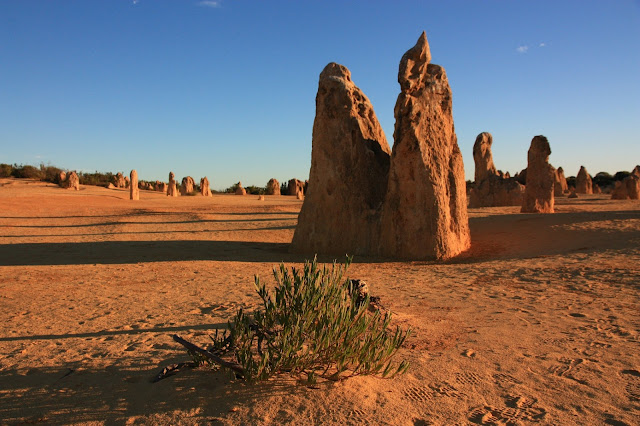
It doesn’t take long upon leaving Perth to return to vast open spaces and infrequent settlements. It takes a lot longer for the weather to warm significantly and the water temperature to be more suitable however. A few hours north of the city sits Cervantes, and a return to camping after so much luxury. The attraction here is Nambung National Park and The Pinnacles Desert, which is truly a spectacle as the end of day light casts shadows and red and orange glows across the many jagged pillars littering the landscape. What is especially great is that you can walk among them, without barriers and too many authoritarian impositions.
 

From the Pinnacles it was a slow and steady drift up the coast, pausing at towns like Jurien Bay and Dongara and Geraldton, typically for coffee or beer or petrol or food. This was all en-route to Kalbarri, where a few days were well spent both working and sightseeing. Kalbarri is a lovely little spot, akin to some of the coastal towns of New South Wales and Victoria, with a few fine beaches, a snaking estuary and river, daggy looking shops and cafes and motels and pubs. There are fishing people and boat people and backpackers and grey nomads and us. There are seabirds and jetties and sunsets on the sands. It’s quite a treasured little spot.
 
 
Kalbarri is situated amongst some spectacular rugged scenery. Indeed, the coast around Kalbarri is full of dramatic bluffs and gorges and tumbling red rocks, plummeting down to a pounding, pristine Indian Ocean. It is ever-changing evidence of the battle between land and sea, as rock platforms emerge over millions of years and crumble away as they are gnawed at by the ebbs and flows of water, baked by the searing summer sun and pounded by winter storms. It is well worth migrating to.
 
The coastline is protected within the borders of Kalbarri National Park, which extends inland following the Murchison River and encompasses an increasingly rocky and arid landscape of gorges and cliffs. Work on the access road to the interior of the park meant that access was restricted, and could only be reached by participation on either an abseiling or canoeing tour. Gently paddling on still waters through a red rock gorge sounds much more appealing than jumping off a cliff, so a few hours on the water was as good a way as any to appreciate the surroundings and experience this special place.
 
Leaving Kalbarri the next stop on the migratory route is around Shark Bay, a World Heritage Area. It seems the name does not put anyone off and curiously it’s renowned for dolphins more than sharks. It also has living things older than sharks and dolphins and some of those grey nomads in too short shorts and Big W polo shirts. Stromatolites at Hamelin Pool, as memorably featured in a book by Bill Bryson, are the oldest living organisms on earth. I think they may have helped other life forms develop, by releasing small bubbles of oxygen into very salty water. As living creatures go, they are not quite as spectacular to look at as, say, a backpacker in skimpy shorts. But they are, in their own little way, quite amazing. (By the way, they are the things that look like rocks on the picture!)
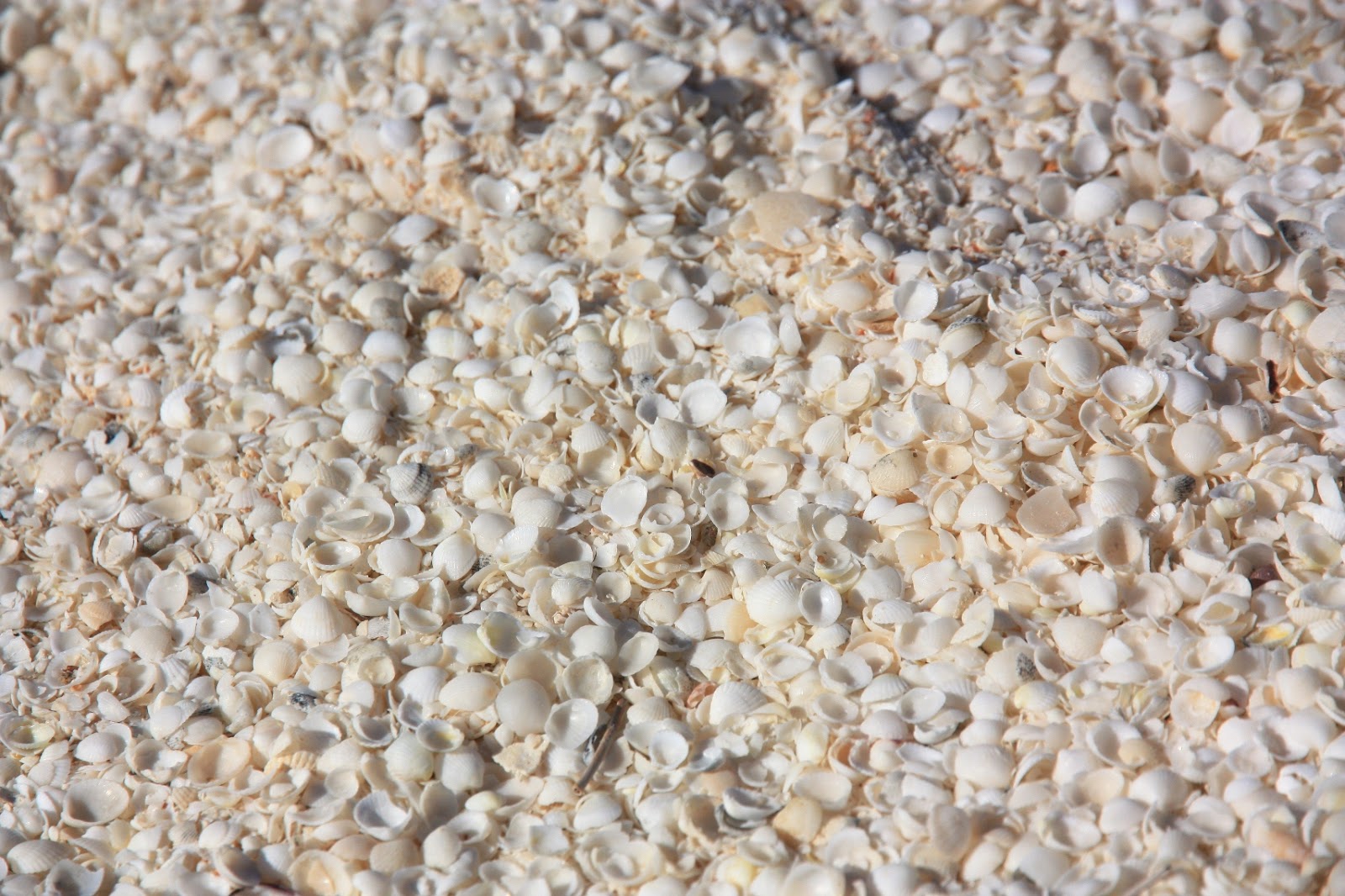
Shells are pretty cool too, and there are many to see washed up along the bays and shores of this area. Most seem to occur at the inspirationally-named Shell Beach. In fact, the whole beach is made up of shells, all perfectly small and white and crunchy. Millions upon millions fringe the bay and they are quite mesmerising to lie in, run your hand through, throw in the air and crouch down in silly positions to get photos of.
Another cool thing around Shark Bay are dolphins, which generally hang out around Monkey Mia (which has no monkeys...that would be just too cool). An equally cool thing is the water in which you wade in to look at the dolphins on a grey, windy June day. It is no tropical paradise yet let me tell you. And as a park ranger rambles on with some interesting factoids and with each factoid you lose the feeling further up your legs, the only solace is the dolphin amiably milling about, probably smugly thinking I’m quite warm thanks, plus I am soon to eat some tasty fish, while for you, my Homo sapiens friend, the coffee shop is closed. Those clicky sounds are actually sniggers of laughter.
 
The dolphins don’t tend to migrate from here, but for our human friends the exodus rejoins the Northwest Coastal Highway and ploughs on into the town of Carnarvon. Here, palm trees and bananas greet you and it should be almost tropical but it is still a little cool. There is not a great deal to see, but a decent coffee and some very decent and reasonably priced fish and chips. It seems to be an enclave for some of those migrating nomads, who linger long over winter and happily mill about the caravan park in which swags are a rare curiosity.
Swags are much more at home just an hour north of Carnarvon around Quobba Station. This is a more rustic experience with ramshackle aluminium sheds and rusty gates, dusty earth and scraggly saltbush. It’s in a beautiful place, where the ocean can explode in fury at one spot and just a little further along shimmer sedately protected by rocks and reef. Shells and coral litter the shores, where the water is just that little bit warmer and reaching the okay to paddle threshold. It’s a bit off the beaten track, off the main road, and I kind of like it that way.
 
The northern end of Quobba Station borders Ningaloo Reef, a band of coral that extends north now fringing the coast all the way to Exmouth. Coral Bay is much more on the beaten track, a point at which road and campsite and fish and boat people meet the amazing turquoise waters, clear and silky in the shallows and dotted with darker clumps signifying coral. Huge snapper are happy to drift alongside legs and feet and snorkels, all in water that is again just that little bit warmer. It is idyllic in many ways and even the hustle and bustle of migratory visitors doesn’t afflict it too much. And besides, a bit of civilisation is good, for ice creams can be bought just a few metres from the water.
 
You can stay at Coral Bay in a campsite or two which has aimed to capture that genuine shanty town experience. They’ll probably charge you handsomely for it, and you can mingle with other big rigs and people wearing too short shorts. Or, like us, you can spend an hour to drive north and have a night at a delightful, genuine outback station. Bullara Station wasn’t flash nor obviously scenic but it was nonetheless full of charm and character. Friendliness abounds, from the family owners who welcome you to visit their place, to the characters camping and cooking and sharing damper around a communal fire. It’s a true blue, red earth kind of place, where you can buy some beef directly from the farm and have a hot shower in the open air (though thankfully within a closed corrugated perimeter). It was one of my favourite stops of the trip and the shower was heaven.
From the outback to the tropics, all within 30 minutes or so. Crossing the Tropic of Capricorn on the road to Exmouth, things weren’t that noticeably warmer or more tropical. Termite mounds pepper the arid landscape, and ranges rise to the west. It’s not until you once more glimpse the azure seas near Exmouth that you remember you are now in a tropical water world. And fleetingly passing through Exmouth for shopping, petrol and good coffee, you reach the end of the cape, but not the end of the road.
 
The western side of this tip of land is dominated by two very marvellous things – Ningaloo Reef, practically coming right next to the shore, and the marvellous Cape Range National Park. It is, as the tourist brochures boast, where the ranges meet the reef. It is immensely popular with migratory animals, including turtles and whale sharks and many, many grey nomads and backpackers. Camping in the national park, next to the reef, is practically off-limits as people who don’t usually bother staying in national parks decide they will park up and stay in their big rigs for two months. It seems a little unfair, but thankfully a decent campground outside the park offered a good base from which to explore.
Cape Range National Park was a delight, in particular the rugged gorges that cut through the red ridges, an archetypal elemental landscape of inland and northern Australia. Two walks at two separate gorges – Yardie and Mandu Mandu – were really enjoyable and offered a fine return to decent bushwalking. The first followed the only watercourse cutting through the range and sometimes spilling out into the ocean. Yardie Creek cut increasingly deeper into the red rocks, offering solace for snakes and lizards, rock wallabies and emus.
 
Mandu Mandu Gorge was altogether different, in that it was a dry creek almost all of the time, the residue of white and pink pebbles offering something of a track to follow, before clambering up above the creek bed for superlative views of the snake like gorge system. Beyond, not too far, the multifaceted blue colours of Ningaloo testament to the sloganeering of the range meeting the reef.
 
And what of this reef? A reef that compels you to take countless photos of clear water, shimmering on the sandy sea bed as it refracts the sun above, changing in colour to reflect the sea floor, from golden to white to turquoise to azure. It is, in the right spots, reasonably warm and embraces many species of coral and fish and crab and turtle. Turtles that occasionally peer out of the water, checking what is going on before drifting away like a clump of seaweed. Aptly named Turquoise Bay is the place to see all this and sit and stare and sleep and sunbathe and revel in this northward migration.
This is the end of this road, the northernmost point I would suspect, but I guess you never know. The migration for others continues to head north and east...Karratha, Port Hedland, the utopia that is supposedly Broome. Trailers and utes, big rigs and small vans will continue to bumble their way along. Amongst it all, a blue Subaru Outback with a chunky roof box will head one way or another, seeking out more red rocks and dust, outback vistas and dazzling sunsets, making its own course amongst the many as it veers around and back to Perth.
 

Thursday, June 13, 2013

Back to the future


So what do you do when you arrive in Perth after so long? Be treated to some wonderful, friendly familiar faces and share a homely dinner with them, sleep in a proper bed, revel in a good coffee by the beach the next morning, feast on piles of calamari for lunch right beside the Indian Ocean, and then...fly back to Canberra. And back to a winter where late autumn clings on to the trees hoping, like the people, that the chill will not set in quite yet.
After a significant period of self-elected retirement on a budget, I made the most of a work opportunity to earn some pennies, make a contribution to society, remember how to do research things and stuff, and revisit Canberra and surrounding regional NSW hot spots. Being back in Canberra was terrific, like some kind of homecoming holiday with a side distraction of employment. Even the first day there was charming, when it remained foggy and cold until two in the afternoon, the highlight a deliberate trudge through the fallen leaves of Forrest for a warming Manuka coffee in a coffee shop where they still remembered my name.


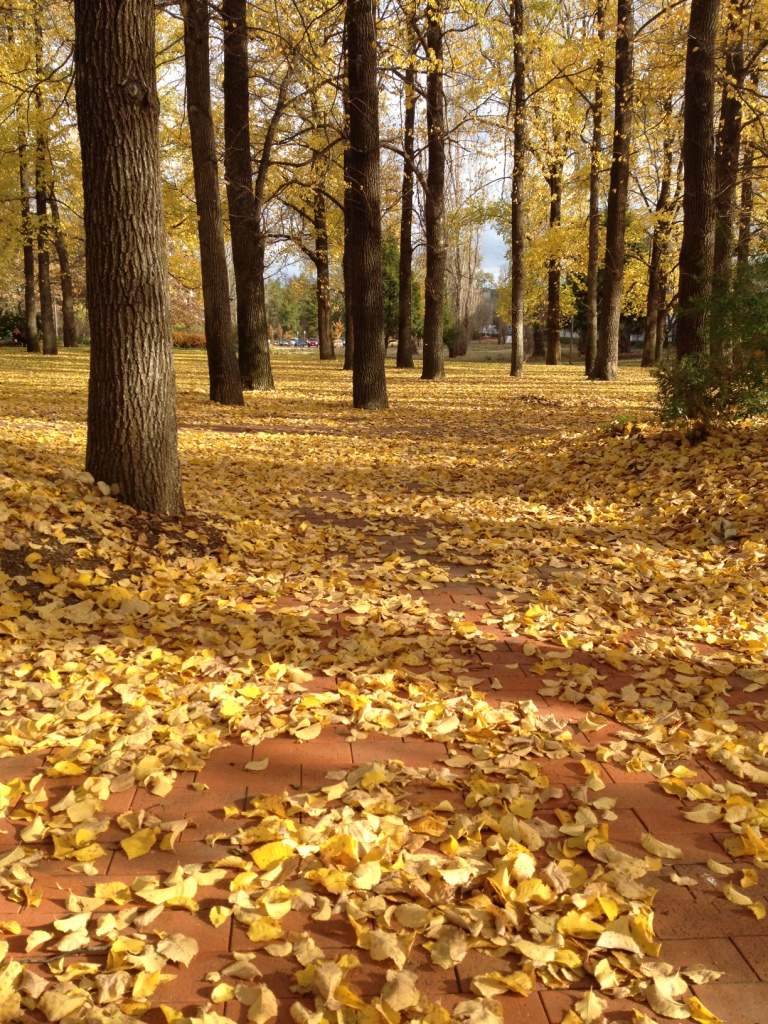
Other time in Canberra involved reacquaintances with people, places and food, often combining the three. Brodburger was as delicious as ever and the company a bright spot on a rainy day. Mee’s Sushi provided reliably fine sushi rolls while Jewel of India offered a satisfying late lunch. A trip to Lonsdale Street Roasters, for a coffee and an hour to kill was quite probably my favourite, the coffee and moment hitting the mark in the way that only it can. This warmth and fuzziness extended to a stroll in beautiful Glebe Park, a sea of yellow leaves and dark brown trunks, before yet more very fine food and company in Koko Black. It was a busy and nutritious few days.
Another item on the menu that didn’t incorporate food was to once more take in the sights of the national institutions on a good circular Sunday morning walk. First I headed through leafy streets and parklands and on to Old Parliament House, where an annual display of political cartoons provided bonus merriment and a reminder of how cartoonists can get it so spot on in one drawing; I struggle with thousands of words. From here to the National Portrait Gallery and onwards to the Sculpture Gardens, always so artistically aesthetic, dominated with native wattles and acacias and perfectly rambling gum trees. And then, with a final flourish, I came out onto an ambler’s paradise, a long burst of autumnal red fringing the lake.

It was here that I was wondering if Canberra is perhaps one of the world’s finest parkland cities. Small as it is, there is much grace and refinement, and the four clear seasons dictate the streetscape, more so than I’ve ever seen in England, which also has four clear seasons (though predominantly an autumnal winter with a touch of spring). Beyond the much manicured it is unmistakeably Australian, the bush capital with bush reserves and bushland hills and bushland panoramas. Like on Red Hill, on which my feet travelled once more and enjoyed as much if not more than ever.
While it is hard to believe, the trip east was more than a Canberra love-fest. There was work to be done, and this took me to the two regional NSW towns of Albury and Wagga Wagga, much researched and previously visited, though happily not on my trip across Australia. So at least it felt kind of new as I headed through Gundagai and down to Albury, trying to remember in the four hour drive how to moderate a group discussion. Happily it turns out that most people in Albury are happy to talk.
While there was much work to be done, my masterful productivity and efficiency meant I created opportunity for a short afternoon drive into Victoria and the lovely old gold town of Beechworth. Its very name suggests a leafy, gracious quaintness, and Beechworth doesn’t disappoint. A throwback to two months ago and meanders through country Victoria, reminiscence was complete with a visit to the local bakery. Only once green leaves now turned to gold and amber and bronze and scarlet. Victoria really does do country towns with aplomb.


---------------------------------------

And so with that minor interruption I was on a flight back to Perth, covering in four hours what had taken many weeks. Give me a Perth winter any day of the week, for the next seven days were mostly clear and pleasant around the 20 degree mark, perfectly suitable for alfresco coffee and fine food. Like fish and chips in Fremantle, or the best breakfast this side of the Great Divide in Leederville, or lovely bread and pastries in Mount Hawthorn, or, well, I could go on. Stocking up on city culture while it’s there.
I don’t think I was quite expecting to enjoy Perth as much as I did, fearing a parochial self-satisfied city masquerading as a country town built on the excessive plunder of minerals which have the good fortune to lay in Western Australia. I’m sure there is a touch of that (evidenced by sprawling McMansion suburbs), but the city has everything you want to enjoy about a city like trains and cafes and museums and traffic lights and shops and buskers and newspapers and botanic gardens. Kings Park of course provides much more than just botanic gardens and remains a protected green jewel overlooking the ever-changing cityscape. Well, at least until some iron ore is found underneath its verdant lawns and wild bushland.

 
Perth was gratefully aided and abetted by staying again in comfort with home-cooked dinners and hot showers and friendly friends and an entertaining toddler whose Mum is the best. Just a short drive from this homely base the Perth beaches stretch almost unbroken along the Indian Ocean and I simply cannot think of a much better Friday morning just chilling and chatting with a coffee at City Beach, followed by lunch at Cottesloe. Afternoon ice cream and Friday night pizza capped off a very good day.

 
Apparently a city is more than a collection of eating places, and I feel like a few hours experiencing some culture on Saturday was just about right to offer a counterbalance. The art gallery was suitably arty although quite eclectic, the museum a hotchpotch of history and geology and nature, from sparkling minerals to stuffed quokkas to shameful histories. And of course the Perth Institute of Contemporary Art was contemporarily quirky, with many a display looking as though it was completed by a three year old, which is generally the way to successfully ‘do’ contemporary art. Enough of this nonsense and on to Northbridge for a beer and Chinese!
All of this eating is of questionable sustainability so things had to give. Time was right to move on and head out of Perth northwards, following the winter sun and warming temperatures eventually into the tropics. Coffee quality would drift off with each kilometre north and eating opportunities would become sparse. Culture would likely disappear altogether. But the landscape would transition and sights would emerge and the topaz waters of the Indian Ocean would lap at white sands and pound at red rocks and it would be fabulous to be on the road again, a long way from the past. 

Sunday, May 26, 2013

Into the west


It says something (not sure what) that the first town of any note upon crossing the Nullarbor is best avoided. You reach Norseman thinking it is all over, that civilisation is returning, salvation is here, only to find a ramshackle high street of forlorn shops and closed businesses. Best top up with petrol at reasonable prices, buy a chunky Kit Kat and iced coffee (for here no quaint cafes or bakeries) and then proceed a mere 200 kilometres to something far more agreeable.
I do wonder that maybe Esperance is enhanced by what it takes to get there, from east, west, north and, indeed, a more watery approach from the south. But it is truly a verdant oasis, a paradise of beautiful bays and islands, lush grasses and trees, bustling shops and occasional cafes. Its beaches take some beating, with a vast choice of white sands and turquoise waters interspersed among the smooth granite headlands, themselves tumbling down into the bays and rising again out to sea in a patchwork of giant stepping stones.
The French first came across this area, with remnants of Gallic flair still evident in some of the place names. But they scarpered when it became apparent that there was a shortage of brie and the red wine ran out, and it was our old friend Matthew Flinders who charted the coast in a more scientific, less laissez-faire kind of fashion. A little east of Esperance, Cape Le Grand National Park carries its French heritage alongside the occasional marker to Flinders’ escapades. Nowadays, people of all nationalities come to visit and marvel in the coastline, many camping in a mini United Nations of a campsite at Lucky Bay where, when busy, the tent area can quite closely resemble a refugee camp I’m sure. Here though, it is primarily about location, location, location.
Now, many of our friends from around the globe decide to climb Frenchman’s Peak in the heart of the park. I’m not sure how this peak got its name, but I’m betting on the fact that if you squint a little the top looks like a rather flamboyant beret. It’s a short but steep climb, inching your way over the lumpy back of the Frenchman, hoping that it doesn’t rain and turn the descent into a death slide. But once on top of the beret, the views are, bien sur, magnifique.
 
For me though, the jewel of Cape Le Grand came the next morning, which joyously arrived with no cloud and sparkling sun. A walk on the powdery snow-like sands of Lucky Bay was more than amiable, before a potter on down to Thistle Bay, just around the corner. Despite being May, despite being the Southern Ocean, despite not having a towel, the water is so perfect, so idyllic, so full of temptation that it’s a sure fire inevitability that feet will get wet and Mum will curse me.
 
A blip in paradise occurred upon leaving Esperance, the second windscreen chip of the trip spreading to a crack precarious enough to warrant turning back. But I can think of worse places to be stuck for an extra couple of days and thanks to the great, friendly service of Matthews Smash Repairs and the recurrent coffee and food of Alimento, we were able to move on repaired and refuelled.
Despite the post-Nullarbor dose of Esperance style civilisation it is still a 500 kilometre trek west to the next place of significant population, Albany. Fortunately, midway between the two is a wild and rugged national park which is benefitting from significant access improvements and a charming little town, Hopetoun, upon its edge. Fitzgerald National Park stands out from the crowd in its diverse geography and geology of empty sweeping bays and raggedy peaks, coated with shrubs and flowers and grasses. A sometimes perpendicular walk up East Mount Barren offered a notable overview of the wilderness, while its beaches once more dazzled within easy reach of the well-equipped campground that we had all to ourselves. I suspect it may not always be this quiet in future.
 
As expected, Albany added itself comfortably to the list of places that would be really quite lovely to live in. Closer to Perth and more bustling than Esperance it nonetheless sits in a wonderful setting, nestled within hills looming over the brilliant blue waters of King George Sound. I’m sure there are plenty of times when the rain slants in on a cold southerly but our visit coincided with perfect clear skies and calm air, when the water shimmers and the green grass glows in a riot of oversaturation. Helping the positive vibes was an overnight stay in a bargain apartment, complete with rare luxuries such as a proper kitchen in which to roast pork and a big TV to watch / endure Eurovision. So good on you Albany and good on you cute Danish singer and good on you crispy crackling.
Alas something of a pork ding a dong la la hangover ensued the next day and the weather deteriorated too as we moved inland to Stirling Ranges National Park. So instead of climbing the dramatic peaks that rise up sharply from the surrounding plains, a day of indecision developed, the dubious weather and dodgy feelings best ridden out in afternoon cosiness and a dozy read in the swag. Start again refreshed tomorrow... 

...and so, suitably refreshed we climbed Bluff Knoll, the highest point in the south of Western Australia on a Tuesday morning. Low cloud and fog gradually lifted to reveal staggeringly expansive views of the ranges and plains, at least until our unremitting upwards steps thrust us into that cloud. Stubbornly refusing to melt away from the summit we nevertheless pushed on through icy winds and blanket greyness to the top, solely for a sense of completion and accomplishment, and certainly not for any views.
 
The Stirling Ranges were a pleasing contrast to the coastal landscape and barren plains that had been very much at the forefront of the previous few weeks. Not since the Grampians in Victoria had there been such a green and fertile landscape of rugged hills and peaks in which to walk. There was a sense of familiarity about it, albeit with its very own Western Australian decorations, unique plants and species endemic only to this range.
Increasingly familiar landscapes followed now all the way to Perth, revisiting places in the southwest that we had both been to before on other visits. This includes the giant trees and beguiling tall forests of karri and jarrah and tingle, whose vast impenetrability is brought to an abrupt halt by cleared and very green grazing land, dotted around pleasant towns like Walpole and Pemberton and Northcliffe. There are many big trees to see and boardwalks to head along, beautiful drives to make and the most wonderful homemade caramel slice to salivate over in Pemberton.
The coast is barely fathomable beyond the wilds of the tangled forests but the rather suave sounding D’Entrecasteaux National Park cuts through to the sea in one or two spots. Just within the park is the best named campground in Australia. Snottygobble Loop hardly entices you to stay by name alone and bears very little of the ooh la la of D’Entrecasteaux, but it is worth spending a night just so I can mention it here. For dinner, pasta pesto with some veggies, a suitably green concoction in Snottygobble.
From a very basic pasta pesto to another of Australia’s gourmet regions, only this one actually seems to have plenty of nice things to eat and drink. The Margaret River region is rightly popular and charmingly rustically civilised. So here was an opportunity to stock on all vital staples like coffee and fudge and wine and chocolate and cheese. The car, feeling like it has done so much for so little reward, also decided to join in and gobble up some fresh green coolant. I think it can sense a rest is near.
Indeed, for some 84 days and 17,000 kilometres we have been invariably chasing the sun as it spans across the sky westward with the rotation of this big land. It has been disappearing across mountains, sinking into endless plains, casting red light onto red rocks, filtering through towering gum trees, vanishing behind storm clouds, sometimes fading with a whimper, other times out with a fiery bang. At the start, on the first day, next to the Tasman Sea near Bondi it did not appear at all. Now, on the pristine sands of Yallingup it is, finally, dipping towards the Indian Ocean. A continent has been crossed and while it is no staggering achievement these days, there is something immensely satisfying about standing on that sand, watching the sun set into a different sea, being extinguished as it farewells Australia and moves into the west.